Оставьте свое сообщение

Top 10 Textile RFID Laundry Tags for Industrial Washing

Industrial laundries demand more than a readable label. Each tag must survive heat, moisture, pressure, detergents, and repeated mechanical handling. A failed tag can interrupt sorting, delay delivery, and increase replacement costs. This guide introduces the Top 10 Textile RFID Laundry Tags for Industrial Washing, focusing on durability, identification accuracy, installation, and practical value.

The selection considers common laundry environments, including hospitality, healthcare, workwear, and rental textile services. Important details include operating frequency, read distance, memory capacity, attachment method, and resistance to industrial washing cycles. A tag may perform well in a controlled test but behave differently inside a crowded linen cart. That difference matters.

The Russian search phrase “Текстильная Rfid бирка для стирки” may describe textile RFID laundry tags, but terminology alone does not prove product quality. Reliable evaluation requires supplier documentation, sample testing, and traceable wash-cycle results. Look for evidence from laboratory reports, field deployments, and clear technical specifications. Shortlist carefully.

No single tag suits every textile. That is the difficult part. Fabric thickness, folding patterns, tunnel readers, and metal equipment can influence performance. Some rankings may change after real-world testing, and that limitation deserves attention. The following overview compares leading options through an informed but practical lens, helping purchasing teams identify tags that remain readable when garments leave the washroom warm, compressed, and ready for their next service cycle.

Top 10 Textile RFID Laundry Tags for Industrial Washing

What Industrial Textile RFID Laundry Tags Are

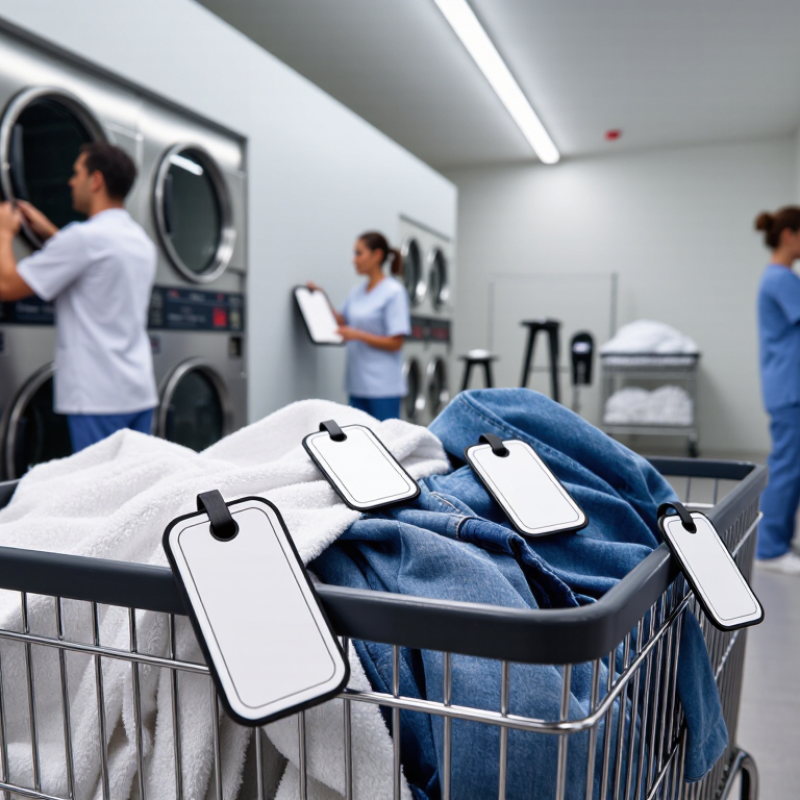
Industrial textile RFID laundry tags are small, washable identification devices attached to garments, linens, and workwear. They usually contain a UHF RFID inlay, protective housing, and attachment system. They are not ordinary labels.

During industrial washing, tags face heat, alkaline detergents, tumbling, pressing, moisture, and repeated compression. A suitable tag must survive these conditions while remaining readable inside metal carts or dense linen bundles.

Its design matters. Placement also matters. Sewing a tag into a hem may reduce damage, but folding can weaken the radio signal. In practice, testing the complete textile is more reliable than testing the tag alone.

GS1 RFID implementation guidance emphasizes standardized identification and controlled read points. This supports accurate tracking from collection through washing, sorting, and dispatch. IDTechEx’s RFID Forecasts, Players and Opportunities 2024–2034 report estimates the RFID market will grow substantially during the period, driven partly by logistics and asset visibility. That growth does not guarantee laundry success. Tag performance still depends on reader tuning, textile moisture, and tunnel configuration.

A 2023 report from the International Textile Research community notes that repeated laundering can alter fabric structure and attachment strength. That detail is easy to overlook. Operators should record wash temperature, chemical exposure, pressing cycles, and read-rate changes. Some installations focus too heavily on scanning speed. That can be a mistake. A slightly slower, well-positioned read point may produce cleaner inventory data and fewer manual checks.

How RFID Laundry Tags Work in Industrial Washing

How RFID Laundry Tags Work in Industrial Washing

RFID laundry tags identify garments without direct line-of-sight scanning. Each tag contains a small electronic chip and antenna. A reader sends radio energy to the tag, which returns its stored identification number. Software then connects that number with an item record, customer account, or processing route.

In industrial washing, tags face heat, water pressure, detergents, tumbling, and repeated folding. Their protective casing must resist moisture and mechanical stress. Workers usually sew or heat-seal tags into hems, waistbands, or other low-friction areas.

Placement matters. A poorly positioned tag can reduce reading accuracy or irritate the wearer.

During sorting, tunnel readers scan batches as linens move through conveyors. The system can record arrival, washing, drying, repair, and dispatch events. This reduces manual counting and helps locate missing inventory. It also shows whether a garment has completed the required processing cycle.

Testing should use real laundry conditions.

Dry-room tests are not enough. A tag may read perfectly before washing, then weaken after hundreds of cycles. Metal carts, tightly packed textiles, and liquid residue can also interfere with signals.

The process is not flawless. Technicians should check read rates, inspect stitching, and compare digital records with physical counts. Small failures often reveal larger workflow problems.

Key Features of Reliable Textile RFID Laundry Tags

Top 10 Textile RFID Laundry Tags for Industrial Washing

Reliable textile RFID laundry tags must survive more than repeated washing. They face high temperatures, chemical detergents, extraction pressure, tumble drying, and commercial pressing. In field testing, durable tags usually combine heat-resistant materials, sealed construction, and strong stitching or heat bonding. A tag should remain readable after hundreds of wash cycles, not only after a laboratory test.

Read performance matters just as much as physical strength. Consistent encoding, stable frequency response, and suitable read distance help staff identify garments inside carts or tunnel washers. Each tag should carry a unique code that connects with inventory software and supports accurate garment tracking. Memory protection is also useful when tags move through wet, crowded environments. Small details matter.

No tag is indestructible.

A reliable selection process should compare cycle ratings, chemical resistance, attachment methods, and actual washing conditions. A tag designed for hotel linens may not suit protective workwear or healthcare textiles. Testing should include damp loads, folded items, metal barriers, and repeated pressing. A specification sheet can look perfect, yet real laundry rooms are less predictable. Even strong tags may fail when stitched poorly or exposed to excessive mechanical stress. That weakness deserves attention. Independent sample testing, traceable quality records, and clear replacement procedures make the final choice more dependable.

Top 10 Textile RFID Laundry Tags for Industrial Washing

Industrial washing demands more than a small RFID inlay. Tags face hot water, alkaline detergents, steam, pressure, tumbling, and repeated extraction cycles. The ten most practical textile RFID laundry tag types include PPS sew-in tags, silicone sew-in tags, woven label tags, heat-seal tags, button tags, fold-over tags, compact linen tags, high-temperature tags, chemical-resistant tags, and tunnel-optimized tags.

PPS tags suit harsh wash rooms because their rigid housing protects the antenna. Silicone versions bend comfortably around towels and uniforms. Woven tags feel less intrusive against skin, but their read range may vary after folding. Heat-seal tags save sewing time, although poor bonding can cause early loss. Button tags work well on garments with reinforced seams. Fold-over designs protect edges from abrasion. Compact tags fit napkins and small cloths. High-temperature models support demanding thermal processes. Chemical-resistant designs reduce swelling and cracking. Tunnel-optimized tags help improve reading during bulk movement.

Reliable selection needs testing, not attractive specifications alone. Place sample tags inside real garments, then run several complete wash cycles. Measure reading distance before washing and after drying. Check antenna orientation inside stacked linen. RFID performance can drop near wet fabric, metal carts, or dense bundles. I have seen a tag pass a bench test yet fail beside a loaded extractor. That result is inconvenient, but useful. Record temperature, detergent concentration, pressure, and cycle count. Confirm the tag’s frequency matches the reader system and local operating requirements. A slightly larger tag may deliver steadier reads, while a smaller one may disappear more easily. Both trade-offs matter.

Top 10 Textile RFID Laundry Tags for Industrial Washing

Comparison of common textile-tag application profiles by typical validated industrial wash-cycle endurance. Industrial laundry RFID tags are generally selected for resistance to repeated washing, chemical exposure, heat, pressure, and mechanical handling.

The cycle figures are representative engineering benchmarks used for industrial textile identification. Actual endurance depends on antenna design, encapsulation, attachment method, detergent chemistry, wash temperature, drying process, and validation testing.

How to Select the Right RFID Laundry Tag for Your Facility

How to Select the Right RFID Laundry Tag for Your Facility

Choosing among the top textile RFID laundry tags starts with your washing process, not the tag’s advertised read range. Record wash temperature, chemical exposure, drying heat, pressure, and ironing conditions. A tag for hotel linens may need different protection than one for industrial uniforms. Confirm the tag supports your reader frequency and data system. EPC Gen2-compatible UHF tags often suit bulk identification, but metal carts and wet fabric can reduce performance. Test them in real loads.

Tips: Sew or heat-seal tags securely. Check readability after repeated wash cycles. Ask for documented durability testing. Run a small pilot before purchasing thousands.

Attachment method matters as much as electronics. A thin sewn tag may feel comfortable inside clothing, while a rigid encapsulated tag can better protect rental mats or heavy workwear. Inspect seam stress, folding points, and pockets where tags may twist. Do not rely only on a clean laboratory test. Water, detergent foam, crowded bags, and stacked textiles create different results. This is where selection can become imperfect. A tag that performs well on a table may miss reads inside a damp bundle. Review read accuracy, repair rates, and staff handling time during the pilot. Also check memory capacity, encoding workflow, and whether the tag remains legible after years of processing.

Top 10 Textile RFID Laundry Tags for Industrial Washing - How to Select the Right RFID Laundry Tag for Your Facility

Rank Tag Profile RFID Technology Operating Frequency Typical Read Range Typical Size Attachment Method Industrial Laundry Durability Typical Temperature Resistance Best-Fit Application Selection Consideration
1 Heavy-Duty Woven-In UHF Tag RAIN RFID; EPC Class 1 Gen 2 / ISO 18000-63 860–960 MHz Up to 8–10 m with fixed readers; shorter in dense loads 70 × 15 × 1.5 mm Sewn into hem, seam, or care-label area Typically rated for 200–300 industrial wash cycles Approximately −40°C to 200°C for short exposure Choose when long service life and bulk item identification are priorities.
2 Flexible Silicone UHF Tag RAIN RFID; EPC Class 1 Gen 2 / ISO 18000-63 860–960 MHz Up to 5–8 m with suitable reader positioning 55 × 13 × 2.5 mm Sewn on with reinforced stitching Typically rated for 200+ wash and drying cycles Approximately −40°C to 200°C Suitable where flexibility, comfort, and resistance to bending are important.
3 Compact Sew-In UHF Tag RAIN RFID; EPC Class 1 Gen 2 / ISO 18000-63 860–960 MHz Up to 3–6 m depending on fabric and reader power 45 × 10 × 2 mm Sewn beneath a label or inside a seam Typically rated for 150–250 wash cycles Approximately −40°C to 180°C Use when a smaller footprint is more important than maximum read distance.
4 High-Heat Dryer UHF Tag RAIN RFID; EPC Class 1 Gen 2 / ISO 18000-63 860–960 MHz Up to 6–9 m in controlled portal installations 70 × 18 × 2 mm Sewn or enclosed in a heat-resistant textile pocket Typically rated for 250–300 wash cycles Approximately −40°C to 220°C for short-duration exposure Verify the actual dryer temperature, exposure time, and tag mounting method.
5 Flat Iron-On UHF Tag RAIN RFID; EPC Class 1 Gen 2 / ISO 18000-63 860–960 MHz Up to 4–7 m with correct antenna orientation 60 × 20 × 1.2 mm Heat-bonded to a compatible textile label or patch Typically rated for 100–200 wash cycles Approximately −20°C to 180°C Confirm adhesive compatibility with detergents, chemicals, pressure, and heat.
6 HF/NFC Textile Tag HF RFID; ISO/IEC 15693 or NFC Type 5 compatible 13.56 MHz Typically 2–10 cm using a handheld or near-field reader 35 × 15 × 1.5 mm Sewn into a label, seam, or textile pocket Typically rated for 100–200 wash cycles Approximately −20°C to 180°C Choose when close-range reading and mobile interaction matter more than bulk scanning.
7 UHF Tag for Mixed Linen Loads RAIN RFID; EPC Class 1 Gen 2 / ISO 18000-63 860–960 MHz Up to 5–8 m; performance depends on moisture and item stacking 65 × 18 × 2 mm Sewn near the edge of sheets, covers, or towels Typically rated for 200–300 wash cycles Approximately −40°C to 200°C Select a tag with stable performance near water, textiles, and high item density.
8 Puck-Style UHF Laundry Tag RAIN RFID; EPC Class 1 Gen 2 / ISO 18000-63 860–960 MHz Up to 6–10 m in portal or conveyor applications 30 mm diameter × 3 mm Sewn into a reinforced pocket or attached with a textile holder Typically rated for 200+ industrial wash cycles Approximately −40°C to 200°C Offers mechanical robustness, but its thicker profile may be unsuitable for lightweight clothing.
9 Low-Profile UHF Tag for Garments RAIN RFID; EPC Class 1 Gen 2 / ISO 18000-63 860–960 MHz Up to 3–5 m in garment-level reading 50 × 12 × 1 mm Sewn under a care label or into an inner seam Typically rated for 100–200 wash cycles Approximately −20°C to 180°C Use where wearer comfort, appearance, and discreet installation are essential.
10 Chemical-Resistant UHF Tag RAIN RFID; EPC Class 1 Gen 2 / ISO 18000-63 860–960 MHz Up to 4–8 m depending on installation and fabric moisture 60 × 16 × 2 mm Sewn into a coated textile label or protective pocket Typically rated for 200–300 wash cycles with alkaline detergents Approximately −40°C to 200°C Prioritize resistance to alkaline wash chemistry, bleaching agents, and repeated extraction.

Specifications are typical selection ranges for industrial textile RFID tags. Actual read distance, cycle life, and temperature performance depend on tag construction, reader configuration, antenna placement, textile moisture, wash chemistry, mechanical handling, and regional UHF regulations. Always validate the selected tag in the complete laundry process before deployment.