Оставьте свое сообщение

7 Best USB UHF RFID Readers for 2026

USB UHF RFID readers are moving from specialist tools into everyday inventory work. MarketsandMarkets’ 2022 RFID market report estimated growth from $14.5 billion that year to $23.6 billion by 2027, a projected annual rate of 10.3%. That forecast signals expanding adoption, but it does not tell buyers which desktop reader will perform well on a crowded stockroom bench. The details matter. A reader’s USB connection is only one part of the decision; antenna design, read range, supported frequency bands, software compatibility, and tag placement shape results in practice.

This guide compares seven USB UHF RFID readers for 2026, focusing on practical factors rather than headline specifications alone. GS1’s EPC UHF Gen2 standard helps explain how compatible tags and readers communicate, while regional frequency requirements can affect which model fits a deployment. The exact string “Usb Uhf Rfid считыватель” may appear in product searches, but buyers should still verify manufacturer documentation, SDK support, and tested performance with their own tags. A metal shelf can change read behavior. So can a stack of tagged cartons. Those limits are easy to overlook. No shortlist can replace a hands-on test, and some published read-range figures rely on ideal conditions. The selections that follow weigh credible specifications, usability, and fit for common workflows, while noting where available evidence leaves room for doubt.

7 Best USB UHF RFID Readers for 2026

USB UHF RFID Reader Basics: EPC Gen2 and ISO/IEC 18000-63

USB UHF RFID readers connect to a computer, but USB describes the data connection, not the radio standard. For UHF tag communication, EPC Gen2 is commonly used; it is aligned with the air-interface requirements in ISO/IEC 18000-63. The standard defines how readers and tags exchange commands, respond, and manage collisions when several tags are nearby. That distinction matters.

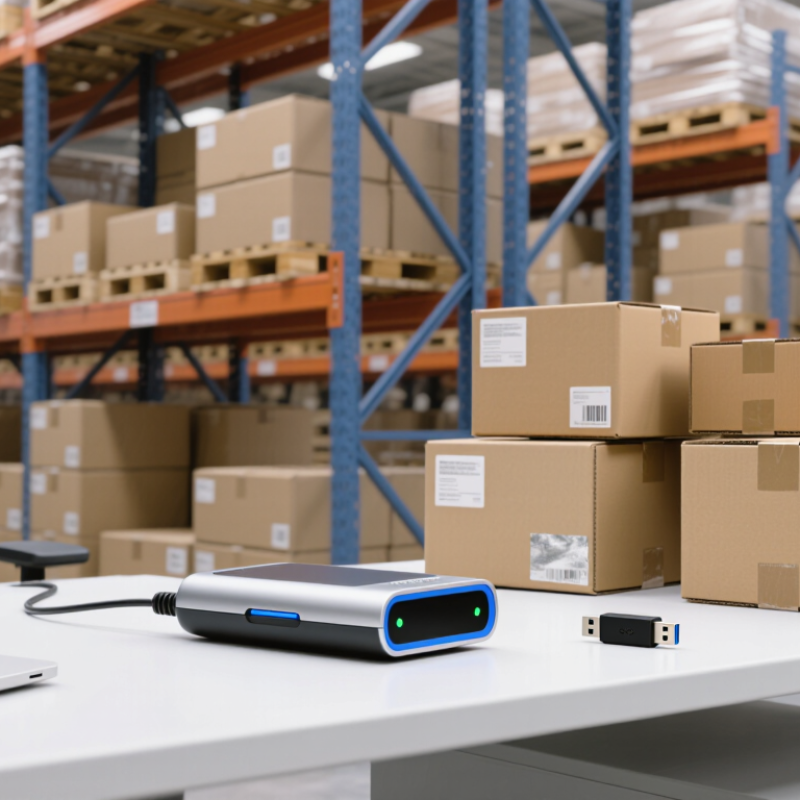
In a stockroom, a reader may inventory tags on boxes across a shelf, while nearby tags answer in quick succession. Anti-collision methods help identify them, but read results still depend on antenna placement, tag orientation, materials, and power settings. Metal shelving can change performance noticeably. A USB connection alone does not guarantee reliable reads.

Before choosing a reader, check its supported frequency range, protocol compliance, antenna options, and host software requirements. Also confirm whether it can report individual tag data, such as the EPC identifier and signal strength, in the format your application expects. Driver support can be less straightforward than the product page suggests. Test with the actual tags and surfaces you plan to use; a small bench test may not reflect a crowded work area. Some uncertainty remains until the installation is tested in place.

The 860–960 MHz UHF Band: Regional Frequency and Compliance Factors

The 860–960 MHz UHF range is not one universal operating window. Regional rules may assign different usable channels, power limits, and equipment requirements. A reader that works well on a test bench may perform differently after crossing a border. Check the destination market’s current requirements before choosing a USB UHF RFID reader.

For practical selection, confirm that the reader supports the frequencies used where it will operate. Then check whether its software allows region-specific settings and whether its antenna and transmit power suit the installation. A small warehouse desk and a metal-shelved stockroom are different environments. Nearby metal, liquids, and dense tag placement can affect read performance. Small details matter.

Compliance is more than a specification-sheet number. Ask for clear documentation of supported frequency ranges, regional configuration, and applicable conformity testing. Do not assume that a broad 860–960 MHz label means every setting is permitted everywhere. Keep a record of the configured region and review it when equipment moves or software changes. This step can feel tedious. It is still easy to overlook, especially during a rushed deployment. Verify uncertain requirements with the relevant regulator or a qualified compliance specialist; product documentation alone may not answer every local question.

How to Compare 7 USB Readers: Protocol, Antenna, and Read-Range Specs

Comparing seven USB UHF RFID readers starts with protocol compatibility, not headline speed. Check whether each reader supports EPC Gen2 / ISO 18000-6C and the frequency band required for your tags and region. A mismatch can make a capable reader seem unreliable. Also confirm host connection, driver support, and whether software lets you adjust transmit power. Small details matter at a busy packing bench.

Antenna design shapes coverage. A built-in antenna keeps setup simple for close scans, such as reading a tagged carton from 20 centimeters away. External antenna ports can help when a fixed workstation needs a wider or angled read zone. Compare antenna gain, polarization, and connector type, but treat advertised read range as a test result, not a promise. Metal shelves, liquid-filled containers, tag placement, and reader power can change performance sharply. Real tests sometimes disappoint.

Tips: Test all seven readers with the same tags, distance, orientation, and host computer. Record missed reads and the time needed to capture ten tags, not just maximum distance. Repeat near materials used in daily work. Keep one inconvenient result; it may reveal a setup weakness. Then compare stable range, antenna flexibility, protocol support, and USB integration against your actual workflow.

7 USB UHF RFID Reader Types Compared for 2026

Compare indicative read-range bands alongside common antenna configurations and protocol support.

The ranges below are broad planning estimates for common passive UHF setups, not specifications for seven particular products. Read range is not fixed by the protocol: tag sensitivity, antenna gain and orientation, reader power, local regulations, and the environment all affect results. Check each manufacturer’s datasheet and test with your intended tags.

Reader type Typical antenna setup Common protocol baseline
USB desktop, integrated antenna1 integrated antennaEPC Gen2 / ISO 18000-63
USB desktop, external antenna1 external antenna portEPC Gen2 / ISO 18000-63
Compact USB reader1 compact external antennaEPC Gen2 / ISO 18000-63
USB-connected fixed reader, 2-port2 external antenna portsEPC Gen2 / ISO 18000-63
USB-connected fixed reader, 4-port4 external antenna portsEPC Gen2 / ISO 18000-63
Higher-power fixed reader with USB interface1–4 external antennasEPC Gen2 / ISO 18000-63
Near-field USB reader1 tuned near-field antennaEPC Gen2 / ISO 18000-63

Seven Best USB UHF RFID Readers for 2026: Key Verified Specifications

Seven Best USB UHF RFID Readers for 2026: Key Verified Specifications

A useful seven-reader shortlist should compare verified specifications, not marketing claims. Check each reader’s supported frequency range, regional configuration, and compliance with the UHF air-interface standard ISO/IEC 18000-63. Confirm USB connection type, power requirements, antenna design, and whether the device supports external antennas. Small details matter. A reader that works well beside a laptop may struggle across a warehouse aisle.

RAIN Alliance’s 2023 industry report estimated global shipments of 52.8 billion RAIN RFID tag chips, reflecting the technology’s broad commercial use. That figure signals a busy market, not proof that any particular reader performs well.

Compare read-rate claims cautiously: tag orientation, nearby metal, liquid products, and reader settings all affect real results. Test shortlisted devices with the tags and objects you actually handle. Check whether software tools provide clear connection status and usable error messages. A specification sheet rarely shows the whole story.

I would also record setup time, because an awkward driver installation can outweigh a small advantage in read range. Before calling any seven options “best,” verify current datasheets and repeat tests under the same conditions.
Choosing a Reader by Tag Density, Workflow, and USB Interface Type

A USB UHF RFID reader should fit the work area, not just the specification sheet. In a desk station with a few tagged items, a compact reader may be enough. Dense stacks are different. Nearby tags, metal surfaces, and overlapping read zones can make results inconsistent. Check how the reader handles multiple tags, then test it with the actual items and layout.

Workflow matters just as much. For quick check-in, keyboard-emulation output can place tag data directly into a focused field. Inventory software may need a serial connection and control over read commands. Confirm which USB interface the computer supports, and whether setup requires drivers or configuration. USB-C is convenient on newer laptops, while USB-A remains common on fixed workstations. Cable length matters, too. A short cable can turn a tidy counter into a cramped one.

Read range claims are only a starting point. Tag orientation, material, and reader placement all affect performance. Test at the distance staff will actually use, including during a busy scan. Watch for duplicate reads and missed tags. Then adjust the workflow, not only the power setting. A specification can look reassuring. Real setups can be stubborn. It is easy to overestimate how much range a small station needs.