Оставьте свое сообщение

Why Choose a PoE UHF RFID Reader for Global Buyers?

Global buyers need more than a product photograph when evaluating a PoE UHF RFID reader. They need stable identification, predictable network performance, and clear deployment evidence. A PoE connection carries both power and data through one Ethernet cable. This simplifies installation near warehouse doors, retail shelves, and manufacturing workstations. Fewer cables usually mean faster commissioning. Not always.

A capable reader can support centralized management, remote diagnostics, and consistent tag capture across connected sites. However, performance depends on antenna placement, tag orientation, metal surfaces, reader settings, and network design. A technical team should test real cartons, pallets, or tagged tools before approving a purchase. Laboratory results alone can mislead. In practical trials, record read distance, missed reads, duplicate reads, response time, and behavior during network interruptions. These details help buyers compare suppliers fairly and avoid optimistic assumptions.

The keyword “Poe Uhf Rfid считыватель” may appear in international searches, yet reliable selection requires more than terminology. Buyers should review regional frequency support, documented certifications, enclosure protection, software interfaces, warranty terms, and after-sales assistance. Ask for integration samples. Request test reports. Confirm update procedures. Experienced vendors explain limitations instead of promising perfect coverage. That honesty matters because every facility has different shelves, materials, traffic patterns, and interference. A well-chosen PoE UHF RFID reader can reduce installation complexity and improve inventory visibility, but only when validated in the intended environment. This guide examines the practical reasons global buyers consider PoE, while recognizing that convenience does not replace engineering judgment.

Why Choose a PoE UHF RFID Reader for Global Buyers?

What a PoE UHF RFID Reader Is and How It Works

Why Choose a PoE UHF RFID Reader for Global Buyers?

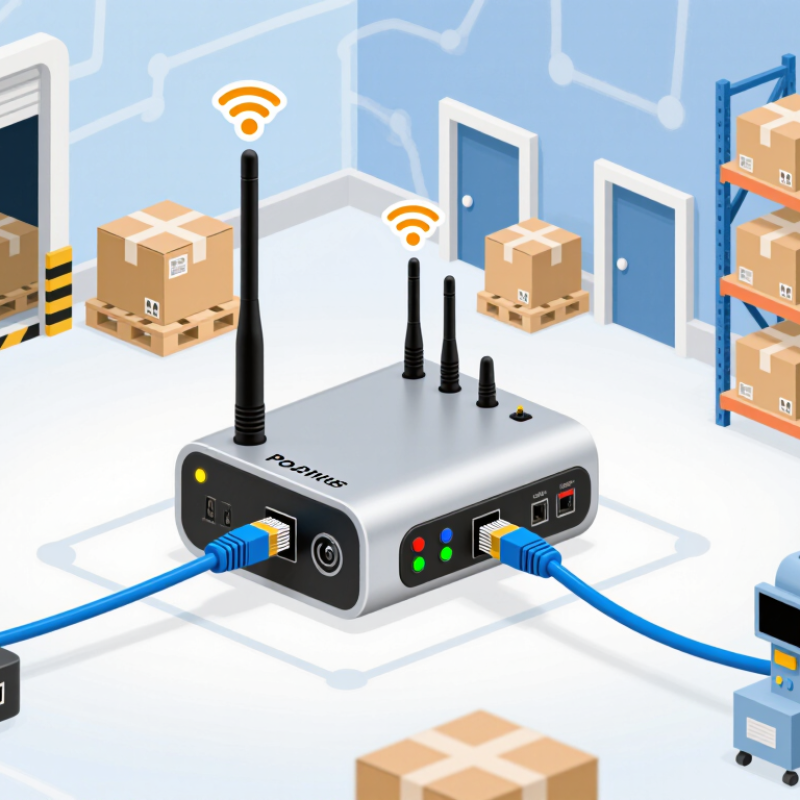
A PoE UHF RFID reader combines radio identification with Ethernet connectivity. One network cable carries both power and data. This simplifies installation above doors, shelves, conveyors, or loading areas. The reader sends radio waves through connected antennas. Passive tags capture that energy and return stored identifiers through backscatter. The reader then filters, decodes, and forwards tag events to software. It feels simple in practice.

The UHF band usually operates between 860 and 960 MHz, depending on regional rules. EPC Gen2 and ISO/IEC 18000-63 provide widely recognized communication frameworks. The RAIN Alliance’s 2024 industry reporting indicates that global UHF RFID shipments exceeded 50 billion tags in 2023. That scale supports international sourcing, but frequency settings still require local verification.

A PoE reader can reduce power adapters, maintenance points, and installation time. IEEE 802.3af or 802.3at support should be checked before deployment.

Performance depends on the environment. Metal racks can reflect signals, while liquids can weaken them. Antenna placement matters more than many project plans admit. A small reading gap may appear beside a doorway. Testing with real cartons, workers, and tag orientations is essential. I have found that “long range” claims often need qualification. A stable read zone is usually more valuable than a dramatic maximum distance. Power budgets, cable length, network security, and event latency also deserve documented testing before purchase.

Key Advantages of PoE Connectivity for RFID Deployments

Why Choose a PoE UHF RFID Reader for Global Buyers?

Key Advantages of PoE Connectivity for RFID Deployments

For global buyers, a PoE UHF RFID reader can simplify installation. One Ethernet cable carries power and data. That matters at loading docks, warehouse gates, and retail back rooms where outlets are limited. Technicians can mount the reader near the antenna, then connect it to a managed PoE switch. Fewer cables usually mean cleaner racks and faster maintenance.

PoE also supports centralized control. Network teams can monitor reader status, adjust settings, and collect tag data from one location. A switch connected to backup power can keep several readers operating during short outages. This reduces manual checks when cartons pass through a portal every few seconds. Ethernet infrastructure also makes expansion practical. A new reading zone may need only a cable run and a configured switch port. Site surveys still matter. Metal shelving, forklifts, and dense products can weaken reading performance.

PoE is not magic. Power budgets vary between readers, switches, and cable lengths. A practical deployment should confirm IEEE PoE compatibility, voltage requirements, grounding, and local installation standards. Network segmentation can protect RFID traffic from unrelated systems. I have seen projects focus on reader sensitivity while overlooking cable quality and switch capacity. That mistake creates unstable reads and difficult troubleshooting. Testing with real cartons is wiser than relying only on laboratory specifications. Some sites may also need fiber uplinks or local power when distances exceed normal Ethernet limits.

Why Choose a PoE UHF RFID Reader for Global Buyers? - Key Advantages of PoE Connectivity for RFID Deployments

A practical comparison of PoE-enabled UHF RFID deployment factors for warehouses, retail sites, manufacturing facilities, logistics hubs, and other connected environments.

Evaluation Dimension Relevant Technical Fact Advantage of PoE Connectivity Buyer Consideration
Single-Cable Installation Power and Ethernet data can be delivered through one twisted-pair network cable when the reader and network equipment support the same PoE mode. Reduces the need for a separate local power outlet and simplifies cable routing to ceiling-, wall-, or portal-mounted readers. Confirm the reader's PoE input requirement and the switch or injector's supported IEEE 802.3 PoE class.
PoE Power Availability IEEE 802.3af provides up to 15.4 W at the power-sourcing equipment, while IEEE 802.3at provides up to 30 W. Usable power at the powered device is lower because of cable losses. Supports many fixed RFID readers without installing a dedicated AC adapter at every reader location. Check the reader's maximum input power, startup demand, connected accessories, and the switch's total PoE budget.
Cable Distance Standard structured Ethernet cabling generally supports a channel length of up to 100 m, including permanent link and patch-cable allowances. Enables flexible reader placement across typical warehouse aisles, loading areas, production lines, and retail zones. Longer runs may require an approved network extension, additional switching, or a local power solution. Validate the complete channel.
Centralized Power Management PoE switches can commonly provide port-level power control, monitoring, and scheduling through network-management functions. Allows administrators to restart or disable a reader remotely without physically accessing the installation point. Management features vary by switch and network architecture; verify support for remote monitoring and port control.
Remote Troubleshooting RFID reader communications and PoE power are carried over the network connection, allowing status and connectivity checks from a central location. Can reduce service visits and speed up fault isolation in distributed or multi-site deployments. Remote access still depends on network availability, cybersecurity controls, reader diagnostics, and appropriate permissions.
Deployment Scalability Each additional reader can use an available PoE-enabled network port rather than requiring a new local electrical circuit. Provides a repeatable installation model for adding read points across aisles, dock doors, checkpoints, and workstations. Plan switch port density, uplink capacity, PoE budget, IP addressing, VLANs, and reader-to-application traffic.
Network Compatibility PoE is defined for compatible Ethernet physical-layer connections, while UHF RFID reader protocols and management interfaces may differ by model. Integrates RFID hardware into an existing Ethernet-based infrastructure and can simplify structured cabling standards. Confirm Ethernet speed, connector type, IP addressing, API or middleware compatibility, and required RFID air-interface support.
Electrical Installation Requirements PoE can reduce the number of low-voltage power adapters and local AC outlets near reader locations. Useful where electrical outlets are difficult, costly, or undesirable to install, such as high bays and controlled production areas. PoE does not eliminate all electrical planning. The network switch, injector, and upstream power system still require suitable protection and capacity.
Reliability and Uptime A centralized PoE supply can be connected to an uninterruptible power system, depending on the site's network design. Readers may remain powered during short utility interruptions when the relevant network equipment is backed up. Uptime depends on the UPS, switch redundancy, cabling, network topology, reader configuration, and application availability.
Global Deployment Consistency IEEE 802.3 PoE is an internationally recognized Ethernet power-delivery framework, while local electrical regulations still apply to facility power systems. Creates a more consistent low-voltage deployment approach across sites using compatible structured cabling and network practices. Review country-specific installation rules, cable requirements, environmental ratings, electromagnetic compatibility, and product certifications.
Installation Labor Combining power and data on one cable can reduce separate cable pulls, power-adapter mounting, and outlet coordination. May shorten installation time and reduce points of failure, especially when multiple readers are installed in one area. Actual labor savings depend on cable pathways, access conditions, existing infrastructure, reader mounting, and commissioning requirements.
Security and Segmentation PoE RFID readers can be placed on managed Ethernet ports and assigned to dedicated VLANs or access-control policies where supported. Helps separate RFID traffic from general user devices and supports centralized network security practices. Use secure credentials, firmware management, least-privilege access, encrypted application connections where available, and network monitoring.
Best-Fit Applications Fixed UHF RFID readers are commonly deployed at dock doors, portals, conveyors, inventory points, process stations, and access checkpoints. PoE is particularly practical when readers are fixed, network-connected, and located away from convenient AC outlets. For mobile readers, high-power equipment, or sites without suitable Ethernet infrastructure, battery, USB, DC, or other power options may be more appropriate.

Technical note: Actual performance depends on the RFID reader's power class, antenna configuration, cable quality, network design, installation environment, local regulations, and the selected PoE source. Always verify the device datasheet and applicable IEEE 802.3 requirements before procurement.

How Global Buyers Can Compare Reader Performance and Compatibility

Why Choose a PoE UHF RFID Reader for Global Buyers?

How Global Buyers Can Compare Reader Performance and Compatibility

Global buyers should compare a PoE UHF RFID reader beyond its advertised read distance. Test read accuracy with the intended tags, materials, and mounting positions. Metal shelving, liquid containers, and crowded cartons can reduce performance quickly. A longer read range is not always better. Excessive sensitivity may capture nearby tags and create unreliable inventory records.

Check the reader’s frequency support, regional settings, and compliance documentation before purchasing. UHF bands differ across markets, so one configuration may not suit every country. Confirm support for common tag protocols, adjustable transmit power, and multiple antenna ports. PoE simplifies installation by carrying power and data through one network cable. Still, verify the switch’s power budget and cable length. Small details matter.

Network compatibility deserves equal attention. Look for standard Ethernet communication, secure management options, and a documented API. These features help connect the reader with warehouse, retail, or asset systems. Test response speed during dense tag movement, not only in an empty laboratory. A reader may perform well on paper but struggle beside conveyors or loading doors. Real sites are imperfect.

Ask suppliers for sample logs, firmware policies, and environmental ratings. Compare operating temperature, ingress protection, warranty terms, and technical support response times. A low purchase price can hide integration work. I would also repeat the test after installation, because early assumptions often prove incomplete. Performance depends on the whole setup, not the reader alone.

Why Choose a PoE UHF RFID Reader for Global Buyers?

How global buyers can compare reader performance and compatibility using typical specifications for fixed passive UHF RFID deployments.

The benchmark index is normalized to the highest typical value in each category. Typical reference values are approximately 15 m read range, 1,000 tags per second, 8 antenna ports, 30 W PoE input, and support for 865–868 MHz and 902–928 MHz regional UHF bands. Actual performance depends on tag design, antenna gain, reader configuration, regulations, and the installation environment.

Installation, Network Integration, and Power Requirements

Why Choose a PoE UHF RFID Reader for Global Buyers?

Installation, Network Integration, and Power Requirements

PoE UHF RFID readers simplify deployment by carrying data and power through one Ethernet cable. This reduces ceiling wiring, cabinet space, and installation time. Field technicians can mount a reader near a dock door, then connect it to a managed switch. The reader can receive a fixed IP address through DHCP reservation. It can also communicate with warehouse systems through secure APIs.

Power planning still matters. IEEE 802.3af provides up to 15.4 watts at the switch, while 802.3at provides up to 30 watts. Cable length, temperature, and connected antennas can affect the available budget. Never assume every PoE port supports the required load. According to the RAIN Alliance 2024 market report, more than 50 billion RAIN RFID transponders were sold globally in 2023. That scale increases the need for reliable network architecture and consistent reader configuration.

Tips: Use a dedicated VLAN for readers, reserve IP addresses, and test power under full antenna activity. Record cable routes and reader settings. Small details prevent expensive troubleshooting.

A practical concern remains. PoE does not remove all installation risks. Metal structures, reflective surfaces, and poor antenna angles can create missed reads. Pilot testing with real cartons is wiser than relying only on laboratory specifications. Network security also deserves attention, including certificate management, access control, and firmware review. Standards evolve, and older assumptions may fail.

Compliance, Scalability, and Total Cost of Ownership Considerations

Why Choose a PoE UHF RFID Reader for Global Buyers?

Compliance begins with regional planning. UHF RFID frequency ranges and transmission limits differ across markets. A compliant reader should support approved regional profiles, controlled output power, and documented electromagnetic compatibility testing. Check certifications before installation, not after shipment. That mistake can delay deployment.

Power over Ethernet reduces separate power adapters and simplifies ceiling or rack installation. In warehouse pilots, one network cable can carry power, tag data, and management traffic. However, existing switches may lack sufficient PoE capacity. A small power budget issue can stop a large rollout. Review cable length, switch standards, backup power, and network segmentation carefully.

Scalability depends on more than reader count. Antenna coverage, read-zone design, software licensing, and data volume also affect performance. A modular architecture allows extra doors or conveyor points without replacing the entire system. Total cost of ownership includes installation labor, configuration time, firmware maintenance, cybersecurity controls, and occasional troubleshooting. The cheapest unit may become expensive when replacement access is difficult. I have seen teams measure hardware price closely while overlooking integration hours. That approach needs reflection. A practical evaluation should compare five-year costs, expected uptime, local technical support, and the effort required to meet each target market’s compliance requirements.