How to Use Mifare RFID Cards Effectively in Your Projects?
Mifare RFID cards have become a key component in numerous projects today. Their versatility and security features make them popular in access control, inventory management, and more. Understanding how to use Mifare RFID cards effectively is crucial for success. This article explores practical strategies you can implement.
When dealing with Mifare RFID cards, it's important to grasp the fundamentals. They operate on electromagnetic fields to transmit data wirelessly. This allows for seamless interactions in various environments. However, many users overlook challenges like signal interference. Knowing these pitfalls is essential for efficient application.
Incorporating Mifare RFID cards can enhance project outcomes. Yet, proper implementation is vital. Decisions about integration, security measures, and user training can significantly impact results. With thoughtful planning and attention to detail, developers can utilize Mifare RFID cards to their fullest potential, paving the way for innovative solutions in diverse fields.
Understanding Mifare RFID Card Technology and Types
Mifare RFID cards are a popular choice for various applications. Understanding the different types of Mifare cards is essential for effective project implementation. These cards include Mifare Classic, Mifare Ultralight, and Mifare DESFire. Each type has unique features and capacities, catering to diverse needs.
Mifare Classic cards are widely used in transportation and access control systems. They offer moderate security and cost-effectiveness. However, their encryption is relatively basic, making them vulnerable to attacks. Consider this when choosing a card for sensitive applications.
Mifare DESFire cards provide advanced security options. They support multiple applications on a single card, which enhances flexibility. However, this complexity can lead to integration challenges. Understanding these details can prevent issues later in your project.
Tips for Implementation: Always test different types of cards in small batches. This helps identify the one that meets your requirements. Be prepared to adapt if the initial choice does not fulfill your project goals. Regularly review your security measures to stay updated with the latest technology advancements.
Essential Components Required for Mifare RFID Project Implementation
Implementing a Mifare RFID project requires a few essential components to ensure effectiveness. First, you need RFID readers compatible with Mifare technology. These devices communicate with the RFID cards. Choose a reader that fits your project scope, whether it's portable or fixed. Some readers are designed for specific environments, which can affect their performance.
Next, Mifare RFID cards are crucial. They come in various formats and memory sizes. Select the card type based on your data storage needs. The decision can impact the project's scalability. Testing card compatibility with the selected reader can save time during development.
Additionally, consider integrating a software system for data management. This can range from a simple database to a more complex server-based solution. An unoptimized system may lead to data loss or inefficiencies. A well-planned software strategy allows better control over the information collected via RFID. Balancing hardware and software is vital for success in your Mifare RFID project.
Step-by-Step Guide to Setting Up a Mifare RFID System
Setting up a Mifare RFID system starts with careful planning. Begin by defining the project's goals. Identify how RFID cards will be used in your system. Is it for access control, asset tracking, or something else? According to a recent industry report, 38% of businesses aim to enhance security with RFID technology. This choice will influence hardware, software, and the overall system design.
Next, select the appropriate hardware. Mifare cards come in various types, such as Mifare Classic and Mifare Ultralight. Each type has specific features and capabilities. For example, Mifare Classic is often used for access control. Meanwhile, Ultralight suits applications requiring low-cost solutions. Many professionals made mistakes by choosing the wrong card type initially. It is crucial to revisit your requirements before making a decision.
Software integration is another key aspect. Choose software solutions that support Mifare technology. Many systems are compatible but may not fully utilize card features. This often leads to underwhelming performance. In fact, around 24% of RFID implementations fail due to poor software choices. Testing and pilot programs can reveal these pitfalls early. Make sure your system allows for adjustments and improvements as you gather user feedback.
Best Practices for Security and Data Management with Mifare Cards
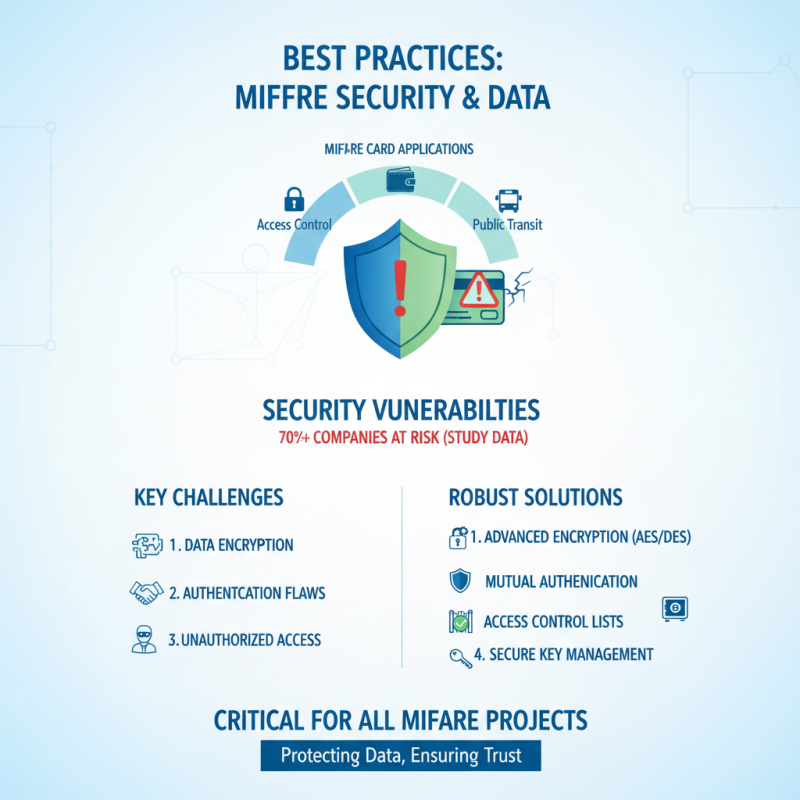
Mifare RFID cards are widely used in various applications, but effective security and data management are vital. Studies indicate that over 70% of companies that utilize RFID technology may face security vulnerabilities if adequate measures are not taken. Therefore, ensuring robust data protection measures is critical for all projects using Mifare cards.
One crucial practice involves implementing strong encryption methods. Reports show that up to 40% of data breaches occur due to weak data transmission protocols. Mifare cards, while versatile, can be susceptible. Regularly updating security protocols protects user credentials and transaction information from potential attacks. Education on RFID risks is often overlooked, yet studies suggest that 60% of failures stem from a lack of user training.
In managing data, consistency is key. Establishing clear procedures for data storage and disposal can prevent unauthorized access. Consider the fact that poorly managed data can lead to compliance issues for 30% of organizations. Mifare technologies can be effective, but without proper oversight, they can also be a liability. Understanding these challenges will guide better implementation strategies.
Real-World Applications of Mifare RFID Cards in Various Industries
Mifare RFID cards have become essential tools across many industries. They provide efficient solutions for access control, inventory management, and asset tracking. In the hospitality sector, hotels utilize Mifare cards for room access. Guests enjoy the convenience of contactless entry, enhancing their experience. Similarly, public transportation systems use these cards for seamless fare collection. Commuters appreciate the quick transactions.
Retail businesses also benefit from Mifare technology. RFID cards help track inventory levels in real-time, ensuring products are always available. However, challenges can arise when integrating these systems with existing setups. Poor implementation can lead to data inconsistencies. It's crucial to invest time in proper training and testing for staff.
Another notable application is in events and entertainment. Mifare cards streamline access at concerts and festivals. Attendees use the cards to enter venues, reducing wait times. Yet, security issues can surface if the system is not tightly managed. Regular audits and updates are vital to maintain reliability and trust. Balancing convenience with security will enhance effectiveness.
How to Use Mifare RFID Cards Effectively in Your Projects? - Real-World Applications of Mifare RFID Cards in Various Industries
| Industry |
Application |
Benefits |
Challenges |
| Transportation |
Smart Ticketing |
Reduced wait times and increased convenience for users. |
Initial setup costs and integration with existing systems. |
| Retail |
Inventory Management |
Real-time tracking of stock levels and reduced shrinkage. |
Need for training staff and possible technical issues. |
| Healthcare |
Patient Identification |
Improved patient safety and streamlined hospital processes. |
Privacy concerns and system interoperability. |
| Event Management |
Access Control |
Enhanced security and reduced lines at entry points. |
Risk of card duplication and technology dependency. |
| Hospitality |
Room Access Control |
Increased guest convenience and reduced key management issues. |
Cost of RFID infrastructure and ongoing maintenance. |