Оставьте свое сообщение

How to Choose the Right Mifare RFID Card in 2026?

Choosing the right MIFARE card in 2026 requires more than comparing prices, memory sizes, and printed designs. RFID adoption continues to expand across access control, public transport, hospitality, retail, and event management. MarketsandMarkets estimated the global RFID market at approximately US$15.8 billion in 2023, with growth toward US$31.7 billion by 2028. The exact figures vary between reports, because market definitions differ. That detail matters. A large market does not automatically mean every MIFARE product suits every project.

A suitable Mifare Rfid карта must match the reader, operating frequency, memory structure, communication standard, and security requirements. MIFARE Classic, Ultralight, DESFire, and Plus products are not interchangeable in practice. A hotel keycard may need fast tap performance and simple encoding. A transit card may require stronger cryptography, higher transaction reliability, and longer service life. Check ISO/IEC 14443 compatibility, available storage, application support, and key-management methods before ordering. Small tests reveal problems.

Professional decisions should rely on manufacturer datasheets, independent testing, and recognized industry guidance. NXP documentation explains important differences between MIFARE product families, while ISO and NFC Forum materials help verify contactless interoperability. GS1 guidance can also support consistent identification practices in larger supply chains. Do not trust a catalogue comparison alone. Reader distance can change near metal doors, wallets, mobile phones, or crowded entrances. Print quality can also affect visual verification. A mistake remains possible, especially when a low-cost card appears technically similar. This guide examines those trade-offs, helping buyers connect measurable performance with real installation conditions, lifecycle costs, and responsible data protection.

How to Choose the Right Mifare RFID Card in 2026?

What Is a MIFARE RFID Card and How Does It Work?

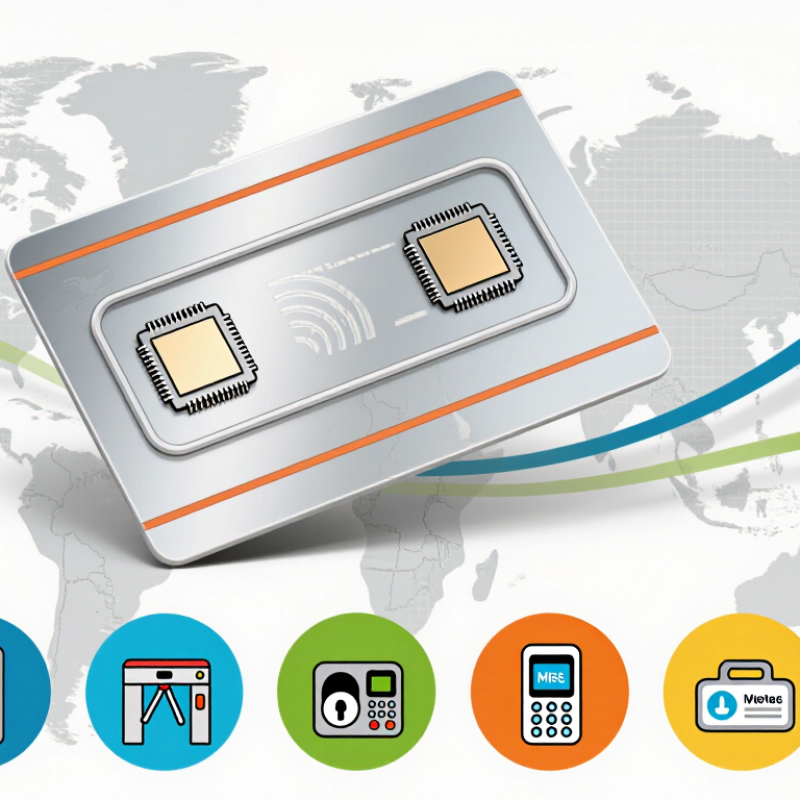
A MIFARE RFID card is a contactless smart card operating at 13.56 MHz. It communicates through near-field electromagnetic coupling. The reader creates an RF field, powering the card’s passive chip without a battery. The chip then sends data through load modulation, changing the field in carefully timed patterns. That exchange can identify a card, verify access rights, or store limited records.

The memory is divided into sectors or application areas. Some cards support authentication and encrypted communication, while simpler versions mainly store an identifier. Security varies greatly. A copied identifier may be acceptable for a low-risk library pass, but not for facility entry or payment-related use. Testing with the actual reader matters more than reading a datasheet.

Industry demand is growing. Grand View Research valued the global RFID market at about 16.5 billion dollars in 2023 and forecast continued growth through 2030. IDTechEx also reports strong expansion in RFID tag volumes, driven by logistics, retail, and identification systems. These figures suggest more choices, not automatically better choices. Check operating frequency, memory size, encryption support, read distance, card material, and reader compatibility before purchasing. Field tests should include wallets, metal surfaces, temperature changes, and repeated tapping. Small details matter. I have seen projects fail because the card worked on a desk but not inside a badge holder. Cost comparisons can also mislead when replacement rates and reader upgrades are ignored.

How to Choose the Right MIFARE RFID Card in 2026? - What Is a MIFARE RFID Card and How Does It Work?

A MIFARE RFID card is a passive, contactless smart card that normally operates at 13.56 MHz and communicates with a reader through near-field electromagnetic coupling. Use the comparison below to match the card type with the required memory, security level, communication speed, and application.

Decision Dimension Card Type or Requirement Best Fit Key Facts Selection Guidance
Communication Standard ISO/IEC 14443 Type A Most contactless access, identification, ticketing, and NFC-compatible deployments Operates at 13.56 MHz and uses short-range inductive coupling. The reader and card must support compatible air-interface and command protocols. Confirm reader compatibility before ordering.
Memory Capacity Small memory: approximately 48–192 bytes Simple identification, one or a few short records, basic NFC data Suitable when the system stores only a card identifier, access parameters, or a small text record. Memory is usually divided into fixed data areas. Choose the smallest capacity that meets the data requirement.
Memory Capacity Medium memory: approximately 0.5–4 KB Stored-value applications, transport data, membership records, and multi-sector access systems Provides more room for application data and multiple sectors or files. Actual usable capacity depends on keys, access conditions, and system structure. Allow extra space for security metadata and future expansion.
Memory Capacity Large memory: 4 KB or more Multi-application cards, detailed credentials, transaction records, and complex data structures Larger capacity supports more files or applications, but generally requires a more capable reader, software stack, and card-management process. Use only when the application genuinely needs larger storage.
Security Level Basic access control Low-risk identification and legacy systems where data exposure has limited impact May rely mainly on card identifiers or simple key-based sector access. It is not appropriate for high-value transactions or sensitive credentials. Avoid for payment, identity, or high-value access control.
Security Level AES-based authenticated security Modern access control, secure transport, campus credentials, and protected data exchange AES authentication and encrypted communication provide stronger protection than legacy proprietary security methods when correctly implemented. Prefer for new systems handling sensitive or valuable data.
Security Level Transaction security and diversified keys Stored value, ticketing, loyalty, and applications requiring fraud resistance Look for mutual authentication, encrypted transactions, per-card or per-application keys, transaction counters, and secure key-rotation procedures. Evaluate the complete security architecture, not only the card.
User Interaction Read-only or low-write use Identity tokens, product information, event check-in, and simple access verification A passive card receives power from the reader and normally requires no battery. Low-write applications reduce wear and simplify testing. Choose this approach when records do not change frequently.
User Interaction Frequent read/write use Repeated access events, balances, counters, tickets, and changing user records Check the memory technology’s write-cycle rating, transaction mechanism, power-loss behavior, and data-recovery features. Test worst-case transaction frequency and interruption scenarios.
Phone Compatibility NFC phone interoperability Mobile reading, digital content, smart posters, and consumer-facing applications Compatibility depends on the phone’s NFC support, operating system, tag technology, memory layout, security commands, and application software. Test with the actual phone models used by customers.
Physical Format ISO card size and thickness Wallet cards, employee badges, membership cards, and standard card printers A common bank-card format is approximately 85.60 mm × 53.98 mm. Typical PVC cards are about 0.76 mm thick, although other materials and thicknesses are available. Verify printer, holder, wallet, and reader-clearance requirements.
Physical Format Key fob, wristband, or embedded inlay Hands-free access, industrial identification, wearable credentials, and product integration The antenna shape, enclosure material, mounting position, and nearby metal can affect read performance and durability. Validate the final form factor in its real installation environment.
Operating Environment Indoor, dry, controlled environment Offices, schools, libraries, hotels, and indoor membership systems Standard plastic cards are often adequate when exposure to moisture, abrasion, chemicals, and temperature extremes is limited. Prioritize compatibility, security, and visual design.
Operating Environment Outdoor, wet, or high-wear environment Outdoor gates, industrial sites, sports facilities, and repeated-use credentials Select a durable substrate or sealed format and verify operating temperature, water resistance, bending resistance, UV exposure, and abrasion performance. Request environmental test data for the finished card.
System Migration Replacement for a legacy card system Projects upgrading security while preserving existing readers or workflows Legacy readers may support only particular commands, memory layouts, or authentication methods. A secure card may require reader and software upgrades. Complete a reader-card-software compatibility audit.
Lifecycle Management New deployment with long service life Systems expected to operate for several years with regular credential issuance Plan for key diversification, card personalization, revocation, replacement, backup, audit logging, and future security upgrades. Choose a platform with a clear migration path.

Important: Memory size, security functions, command sets, write endurance, and compatibility vary by card implementation. Always confirm the technical datasheet and test the complete card-reader-software system before deployment. Never use the card identifier alone as a security credential for high-risk applications.

Which MIFARE Card Types Are Available in 2026?

In 2026, MIFARE cards are available in several families, each designed for a different operating environment. MIFARE Classic remains common in older access systems, with 1K and 4K memory options. However, its older Crypto1 security should not guide a new high-security project. Compatibility is useful, but it can also preserve yesterday’s weaknesses.

MIFARE Ultralight cards suit short-term tickets, event passes, and limited-memory applications. They are small, fast, and often cost-effective. Ultralight variants provide different memory sizes, counters, and security features. MIFARE Plus offers a practical migration path for systems moving from Classic technology toward stronger AES-based protection. It can support compatibility during staged upgrades, although configuration mistakes may reduce its security value.

For stronger protection, MIFARE DESFire cards support multi-application structures, encrypted communication, and flexible file management. EV2 and EV3 versions are commonly considered for transit, secure identification, and closed-loop payment environments. Choose them when several services must share one card without exposing every application. Memory capacity, encryption requirements, reader support, and transaction speed should be checked together. A card that looks advanced may still fail with an outdated reader. Test the complete system, not only the chip. I have found that real deployment conditions often change the original choice. That is worth admitting. Availability also varies by supplier, region, and production schedule, so confirm current specifications before ordering.

How to Match Card Features With Your Application

Choosing the right contactless RFID card starts with the application, not the card’s advertised specifications. A staff entrance system may need secure authentication and encrypted data exchange. A library tag may require simpler identification and moderate memory. For event access, fast reading and a short transaction time matter more than large storage capacity. Define the task clearly.

Match memory size to the data you will actually store. A card holding a unique ID does not need extensive memory. Larger memory may support records, but it can increase cost and configuration effort. Check the operating frequency, reader compatibility, and communication protocol before ordering samples. A card that works on a test desk may behave differently near metal doors, phones, or other cards. I once underestimated that interference.

Security should reflect the value of the protected system. Choose cards with suitable authentication, diversified keys, and controlled access permissions for offices or payment-related environments. For low-risk identification, basic serial-number reading may be enough. Avoid storing sensitive personal data when an encrypted reference can work instead. Review key management with your technical team, because a strong card cannot repair weak procedures.

Then inspect the physical environment. Select PVC, PET, or a durable composite based on bending, moisture, heat, and daily handling. Test printed surfaces, hole placement, and wallet performance. Keep several samples in real conditions for a week. That small test often reveals inconvenient failures. Availability also matters. A technically perfect card becomes a poor choice if replacement supply is uncertain.

What Security and Compatibility Factors Should You Check?

How to Choose the Right Mifare RFID Card in 2026?

Security should match the actual risk, not just the card’s advertised memory. Check whether the card supports mutual authentication and encrypted communication. Basic UID reading is not enough for sensitive access control. Ask how keys are generated, stored, rotated, and revoked. Diversified keys can limit damage if one card is exposed. Look for documented security evaluations, not vague claims. A secure chip still fails when installers leave default keys unchanged.

Compatibility needs equal attention. Confirm the operating frequency, communication protocol, memory structure, and reader requirements. Many systems use 13.56 MHz, but similar frequencies do not guarantee interoperability. Check sector permissions, application identifiers, data formats, and supported card commands. Test the card with existing readers, mobile devices, printers, and encoding tools. Metal surfaces, wallets, and crowded entrances can reduce reading reliability. Small differences matter.

Run a pilot before ordering thousands of cards. Test wet hands, stacked cards, cold rooms, and daily tapping habits. Measure failed reads, transaction speed, and usable distance. Review the reader’s firmware and the access software’s update process. Keep a written key-management procedure and an inventory of issued cards. Do not trust the product sheet alone. I have seen technically compatible cards fail because the system expected a different memory layout. That overlooked detail can become an expensive lesson.

How to Compare Costs, Suppliers, and Long-Term Reliability

How to Choose the Right Mifare RFID Card in 2026?

Price is only the visible part of an RFID card’s cost. Compare the card, encoding, printing, shipping, minimum order, and replacement rate. A cheaper card can fail during daily tapping, creating hidden labor costs. RAIN Alliance’s 2024 industry report recorded 52.5 billion RAIN RFID tag chips shipped in 2023, a 24% annual increase. This growth shows strong demand, but quality still varies between suppliers.

Request samples from at least three suppliers. Test them on your actual reader, not only on a supplier’s demonstration device. Check read distance, surface durability, antenna consistency, and performance near metal or mobile phones. Ask for documented testing against ISO/IEC 14443 and relevant card durability standards. Review quality certificates, production traceability, warranty terms, and sample approval records. Long-term reliability needs evidence.

Tips: Calculate total ownership cost over three years. Record rejected cards, replacement labor, and delivery delays. Ask whether the supplier can keep the same material and antenna design. Small batch testing is slower, but it may prevent a large mistake. I once underestimated packaging damage during transport; the cards worked, yet their surfaces arrived scratched. That detail changed the final supplier decision. Industry forecasts can guide purchasing, but your own test data should carry more weight.