Choosing a parking reader is not simply a matter of selecting the longest read range. Global buyers face different climates, vehicle flows, mounting conditions, and integration requirements. The right Считыватель Rfid для парковки must perform beside concrete barriers, metal gates, rain, dust, and moving traffic. It must also connect reliably with access software, payment systems, and vehicle identification workflows.
Klaus Finkenzeller, author of RFID Handbook, states, “An RFID system must be considered as a complete system, not as isolated components.” His point remains practical. A reader may look powerful in a showroom, yet perform poorly near metal surfaces or poorly positioned tags. Experienced installers test antenna angles, cable lengths, lane widths, and tag placement before approving a purchase. Small details matter.
This guide compares top RFID parking readers for global buyers. It examines operating frequency, reading distance, weather protection, communication interfaces, installation effort, and long-term maintenance. It also considers regional supply support and documentation quality. A low purchase price can become expensive after repeated service visits.
No reader wins every site. That is the uncomfortable part. Buyers sometimes trust technical brochures too quickly. Real vehicles create unpredictable reflections, and drivers do not always place tags correctly. Therefore, field trials should support every serious decision. The strongest choice balances dependable identification, simple integration, and realistic operating costs. Performance figures deserve questions, not blind confidence.
Top RFID Parking Readers for Global Buyers?
What RFID Parking Readers Are and How They Work
RFID parking readers identify vehicles or users through radio signals. A tag stores a unique identification number. It may sit on a windshield, access card, or ticket. The reader sends radio energy through its antenna. The tag responds with stored data. A controller then checks access rules before opening the barrier.
In a practical installation, the reader, antenna, loop detector, and gate must work together. When a vehicle reaches the lane, the antenna captures the tag response. Software verifies the account, records the entry time, and activates the gate. Some systems also connect with payment terminals or parking databases. The process usually takes less than a second. Small delays still matter during busy hours.
Global buyers should check operating frequencies and local radio requirements. Frequency rules vary between regions. Metal barriers, tinted glass, rain, and nearby readers can weaken performance. A longer reading distance is not always better. It may detect tags in the wrong lane. During testing, installers should measure accuracy at different vehicle speeds. They should also test damaged tags, poor alignment, and power interruptions. These checks reveal weaknesses that product sheets often miss. Secure data handling, weather resistance, simple maintenance, and compatible interfaces deserve equal attention. A technically strong reader can still disappoint when installation training is overlooked.
Choosing the top RFID parking readers starts with matching the reader type to the parking site. Site conditions matter more than impressive range.
Fixed UHF readers suit gated lots, apartment entrances, and office parking areas. They can identify windshield tags from several meters away, reducing stops during busy hours. Short-range HF readers work better at ticket machines, staff entrances, and pedestrian gates. Drivers usually present a card or tag close to the antenna. This design gives more deliberate access control, but it may slow traffic during peak periods.
Mobile RFID readers support temporary events, overflow parking, and inspection teams. Staff can carry them between lanes and check vehicle credentials near the windshield. Standalone readers are useful for small private lots, especially where the gate controller is simple. Integrated readers fit airports, hospitals, and commercial garages that need barrier control, access records, and payment equipment to communicate.
Performance depends on antenna placement, tag position, metal barriers, and weather exposure. Wet glass and poorly mounted tags can reduce reading consistency. Test this in real traffic. A laboratory result may not survive a crowded Monday morning. Global buyers should also check power requirements, network options, enclosure protection, and local installation support. I would not choose the longest reading distance automatically. Excessive range can detect the wrong vehicle in a nearby lane. That risk is easy to overlook.
| Reader Type | Typical Parking Site | Common RFID Frequency | Typical Read Distance | Credential Format | Best Use Case | Important Selection Factors |
|---|---|---|---|---|---|---|
| Long-Range UHF Reader | Highway toll areas, residential gates, corporate campuses, logistics yards | 860–960 MHz UHF, depending on regional regulations | Approximately 3–10 m with a suitable vehicle tag and installation | Windshield or headlamp label; passive UHF tag | Hands-free vehicle identification at entry and exit | Local UHF band plan, antenna placement, lane width, tag orientation, metal and radio interference |
| Medium-Range UHF Reader | Office parking, hotels, shopping centers, hospitals and mixed-use buildings | 860–960 MHz UHF | Approximately 1–5 m in a controlled lane | Passive vehicle tag or reusable windshield transponder | Automatic access control without requiring the driver to stop for a card | Read-zone control, anti-collision performance, barrier integration, weather protection and data interface |
| HF Proximity Reader | Apartment garages, employee parking, gated communities and access-controlled facilities | 13.56 MHz HF | Usually a few centimeters to about 10 cm, depending on the credential and reader design | ISO/IEC 14443 or ISO/IEC 15693 card, key fob or NFC-compatible credential | Controlled, deliberate presentation of a card or fob at a gate or door | Credential standard, security architecture, reader location, tamper resistance and access-control compatibility |
| LF Proximity Reader | Legacy residential, industrial and small-facility parking entrances | 125 kHz or 134.2 kHz, depending on the system | Typically a few centimeters | Low-frequency key fob, card or vehicle transponder | Simple identification where existing credentials must be retained | Legacy-system compatibility, credential cloning risk, reader replacement options and migration path |
| Integrated RFID Barrier Reader | Single-lane parking entrances, exits, visitor lots and small commercial facilities | Usually UHF for vehicle tags or HF for short-range credentials | About 0.1–5 m, determined by the selected RFID technology | Vehicle tag, card, key fob or encoded windshield label | Compact access point combining identification and gate-control functions | Relay output, loop detector input, barrier protocol, lane safety sensors, enclosure rating and maintenance access |
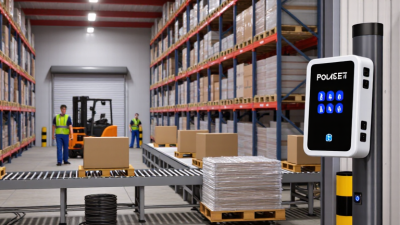
| Outdoor Pole-Mounted Reader | Open-air lots, stadium parking, airports and large outdoor campuses | Commonly UHF; HF may be used for close-range card access | Approximately 1–10 m for UHF, subject to antenna and site conditions | Passive vehicle tag, card or key fob | Reliable identification across exposed vehicle lanes | IP rating, operating temperature, UV resistance, lightning protection, grounding, cable routing and vandal resistance |
| Indoor Garage Reader | Multi-level garages, underground parking and enclosed building entrances | UHF, HF or LF according to the access-control design | A few centimeters to approximately 5 m | Windshield tag, card, key fob or mobile-compatible HF credential | Access control in areas with limited space and reflective structures | Metal and concrete reflections, antenna tuning, reader positioning, network coverage, ventilation and fire-safety requirements |
| Multi-Technology Reader | Sites supporting existing cards while gradually introducing hands-free vehicle access | Typically UHF plus HF or LF | From a few centimeters to approximately 10 m, depending on the active technology | Vehicle tag, contactless card, key fob or mobile credential | Phased migration, visitor access and mixed user populations | Credential priority rules, event filtering, software integration, cybersecurity, licensing and total cost of ownership |
Note: Actual read distance varies with regional frequency regulations, antenna gain, tag orientation, vehicle speed, installation height, surrounding metal, interference and lane geometry.
Reliable RFID parking readers begin with consistent detection, not impressive brochure numbers. In field testing, a reader should identify authorized tags as vehicles approach slowly or quickly. A stable read range of three to eight meters often suits entry lanes, but site testing remains essential. Metal barriers, tinted windshields, and nearby readers can reduce performance. That part is often underestimated. Anti-collision processing helps several vehicles pass without confusing their tags. Response time matters during morning queues.
Weather resistance is another practical measure. Look for sealed housings, wide operating temperatures, and protection against dust and heavy rain. Cable glands should remain tight after seasonal expansion. Surprisingly, small water leaks cause many avoidable failures. A reader should support common access interfaces, such as OSDP or Wiegand, with clear status signals. This makes installation, diagnostics, and replacement easier for local technicians. Secure credential handling also matters where personal vehicle data is stored. Encryption, controlled permissions, and audit logs strengthen accountability without complicating daily entry.
Reliable operation depends on more than hardware. Installers should check grounding, power stability, lane geometry, and network coverage before commissioning. Remote monitoring can reveal missed reads before drivers report them. However, no reader performs perfectly in every parking structure. I would leave room for calibration mistakes and changing traffic patterns. A practical maintenance plan should include antenna-face cleaning, firmware reviews, and spare units. Local technical support can be as valuable as extra reading distance.
Global buyers should compare RFID parking readers by operating conditions, not brochure range. MarketsandMarkets estimates the global RFID market will grow from about USD 16.5 billion in 2023 to USD 35.6 billion by 2030. That growth increases supplier choices, but also creates inconsistent specifications. Check the reader frequency, tag compatibility, antenna layout, and read speed. A longer read range is not automatically better. It may detect vehicles in adjacent lanes.
Field evaluation should begin with the parking entrance. Measure lane width, vehicle speed, mounting height, and metal interference. Ask for tested read rates, not ideal laboratory results. For busy facilities, confirm whether the reader supports anti-collision processing and stable identification during tailgating events. The enclosure should match outdoor conditions, including rain, dust, heat, and cleaning chemicals. IP ratings matter. So does service access.
Berg Insight’s smart parking research shows growing investment in connected parking infrastructure across Europe and North America. This makes integration important. Compare APIs, relay control, database compatibility, remote diagnostics, and offline operation. Security deserves equal attention. Review encryption, credential management, audit logs, and firmware update procedures. Total cost should include tags, antennas, installation, software, maintenance, and replacement stock. I would also request a live site trial. Datasheets can hide weak performance near tinted glass or crowded lanes. That part is easy to underestimate.
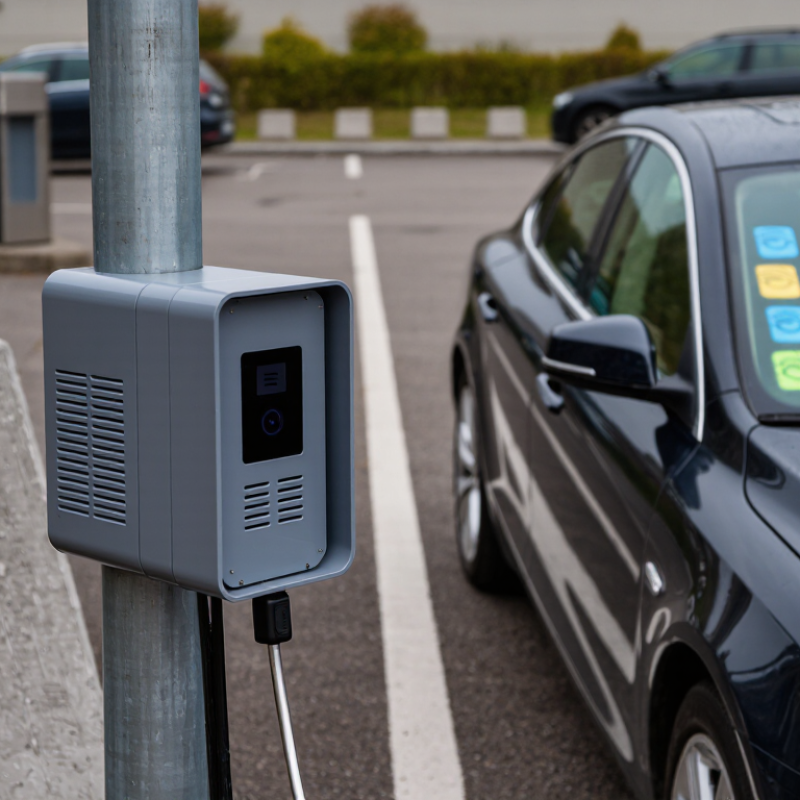
Selecting an RFID parking reader starts with the site, not the catalog. Concrete columns, metal gates, and nearby cables can weaken reading performance. During installation, keep the antenna aligned with the vehicle path. Test several vehicle heights and entry angles. Test it outdoors. Rain, dust, glare, and winter temperatures often expose weaknesses missed in indoor trials. A reader should support adjustable read range, secure mounting, and clear status indicators for maintenance teams. Small errors matter.
Integration requires more than connecting power and opening a gate. Confirm compatibility with the parking controller, access software, payment system, and emergency override. Standard interfaces can simplify replacement, but actual data formats still need testing. Check response times during peak traffic. A reliable setup records successful reads, rejected credentials, and offline events without creating duplicate entries. Use encrypted communication where available, restrict administrator access, and define retention periods before deployment. Integration failures are rarely dramatic at first; they appear as delays, repeated scans, or confusing audit records.
Compliance varies by country and sometimes by city. Verify radio-frequency approvals, electrical safety requirements, electromagnetic compatibility, and environmental ratings. Data protection rules may apply when vehicle identities, timestamps, or account details are stored. Provide transparent notices and collect only necessary information. Accessibility and fire-safety requirements can also influence reader height, lane design, and manual release controls. Local certification advice is valuable, yet it should not replace field testing. A technically compliant reader may still perform poorly at a crowded, wet entrance. That is an uncomfortable gap worth checking.